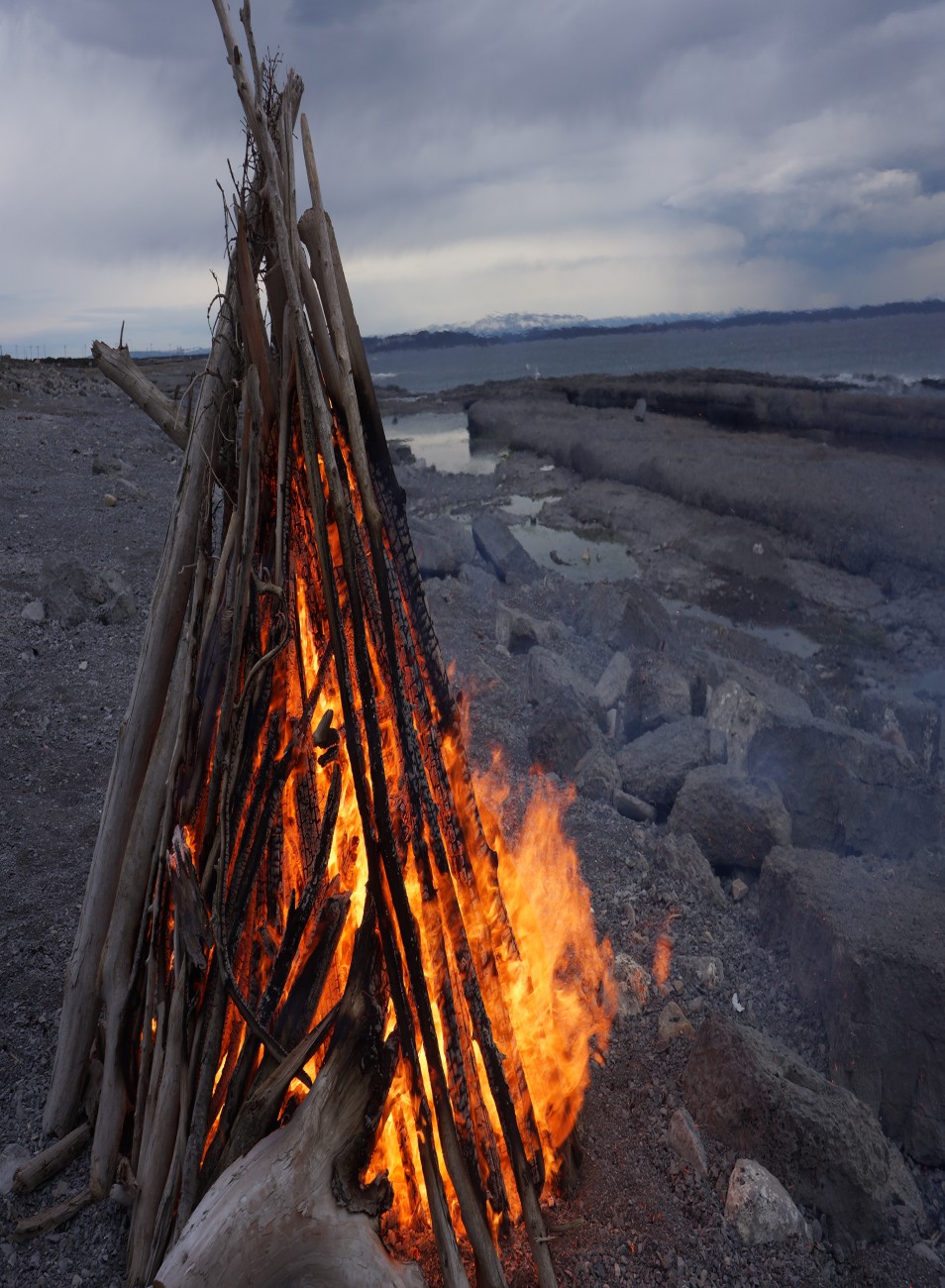
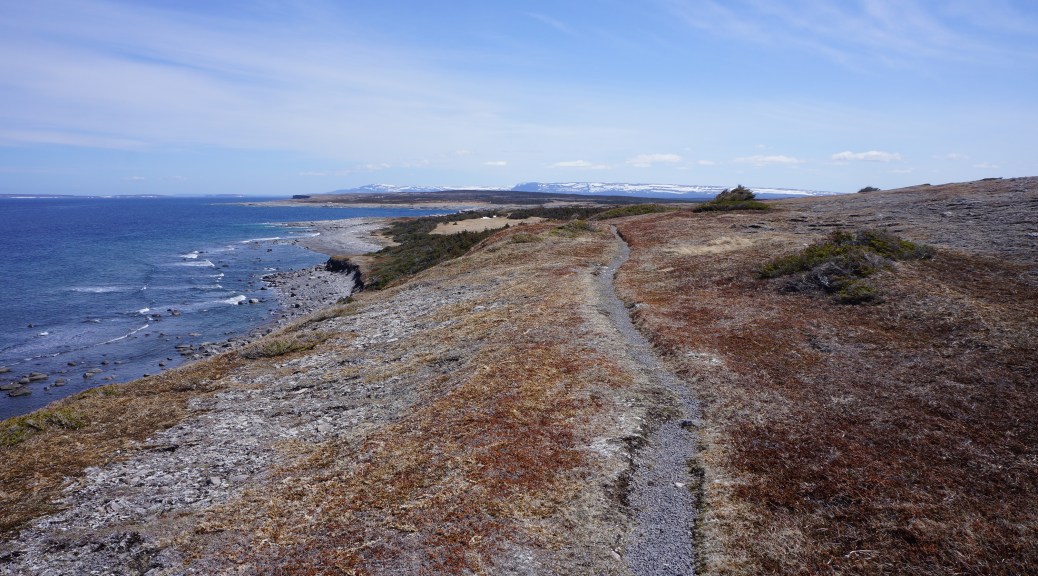
Phillip’s Trail along the shore to Port au Chois
All posts by airstream2305
Oops, forgot to latch the cabinet

NOTHING was broken.
Road Food and the Alien Veggie

St. Martha’s
Sunday, July 7 th
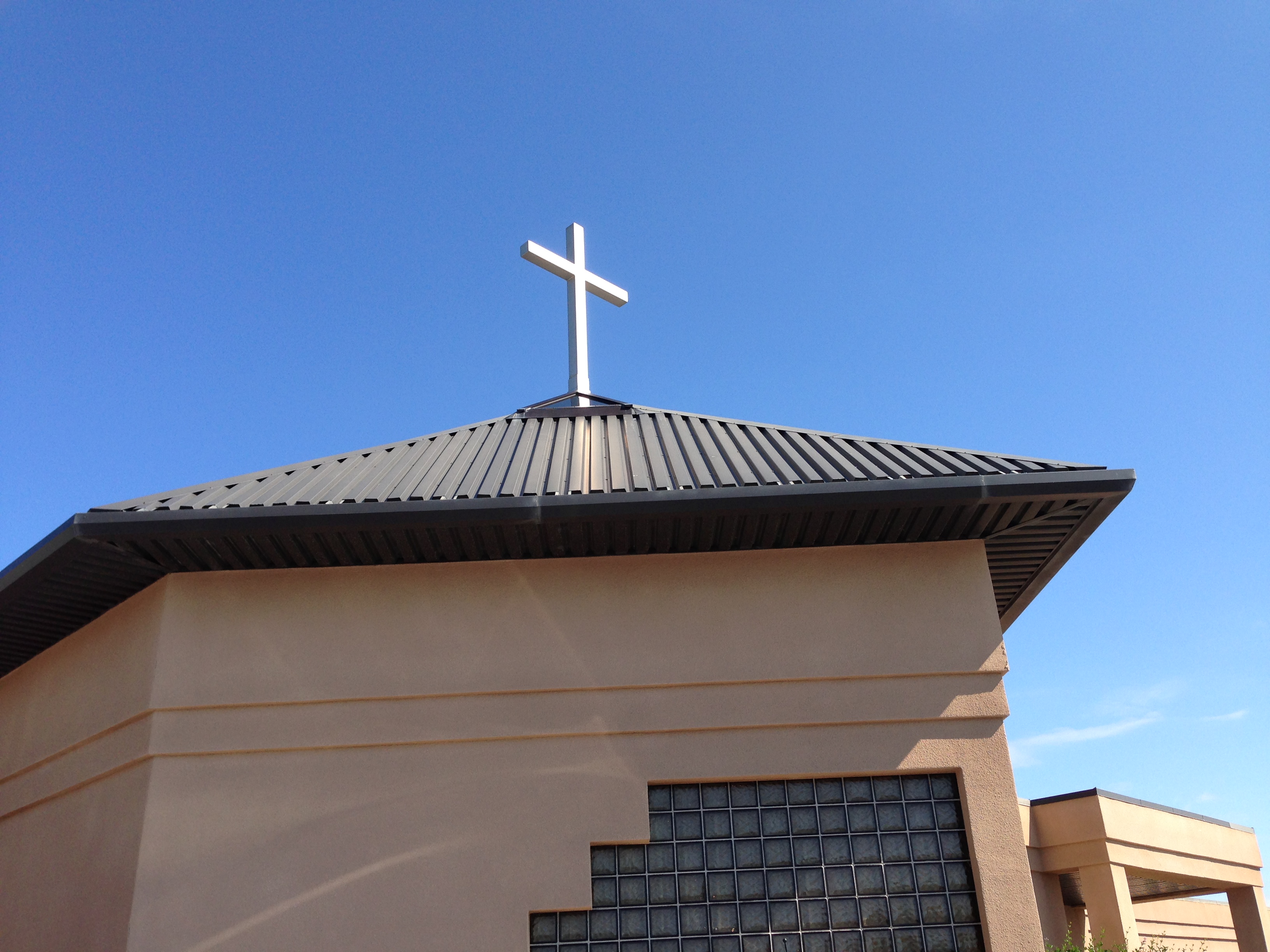
St Martha’s is in Lethbridge, Alberta. Wonderful music ( choir, piano and electric base), beginning with “Here I Am Lord” and ending with “Canticle of the Sun” (St Francis).

Huron’s St. James River

The St James River runs through Huron. It is special geographically, it defines
the boundary of two climate zones. East of the river recieves more rain and the
soil is richer, making it ideal for farming. To the West it is more arid and the soil
is good for the growth of grasses. Thus, ranching is done instead of farming.
The St. James is really where the West begins. ( Source SD highway marker)
The 56th International Rally ( click pictures to expand)

Almost four hundred Airstreams from about 90 units came to the rally.

Getting ready to post the unit colors: the opening flag ceremony.

The vintage club was well represented.

Over 90 Units, from the United States and Canada, posted their flags.

Our spot at the rally.
Holy Trinity in Huron
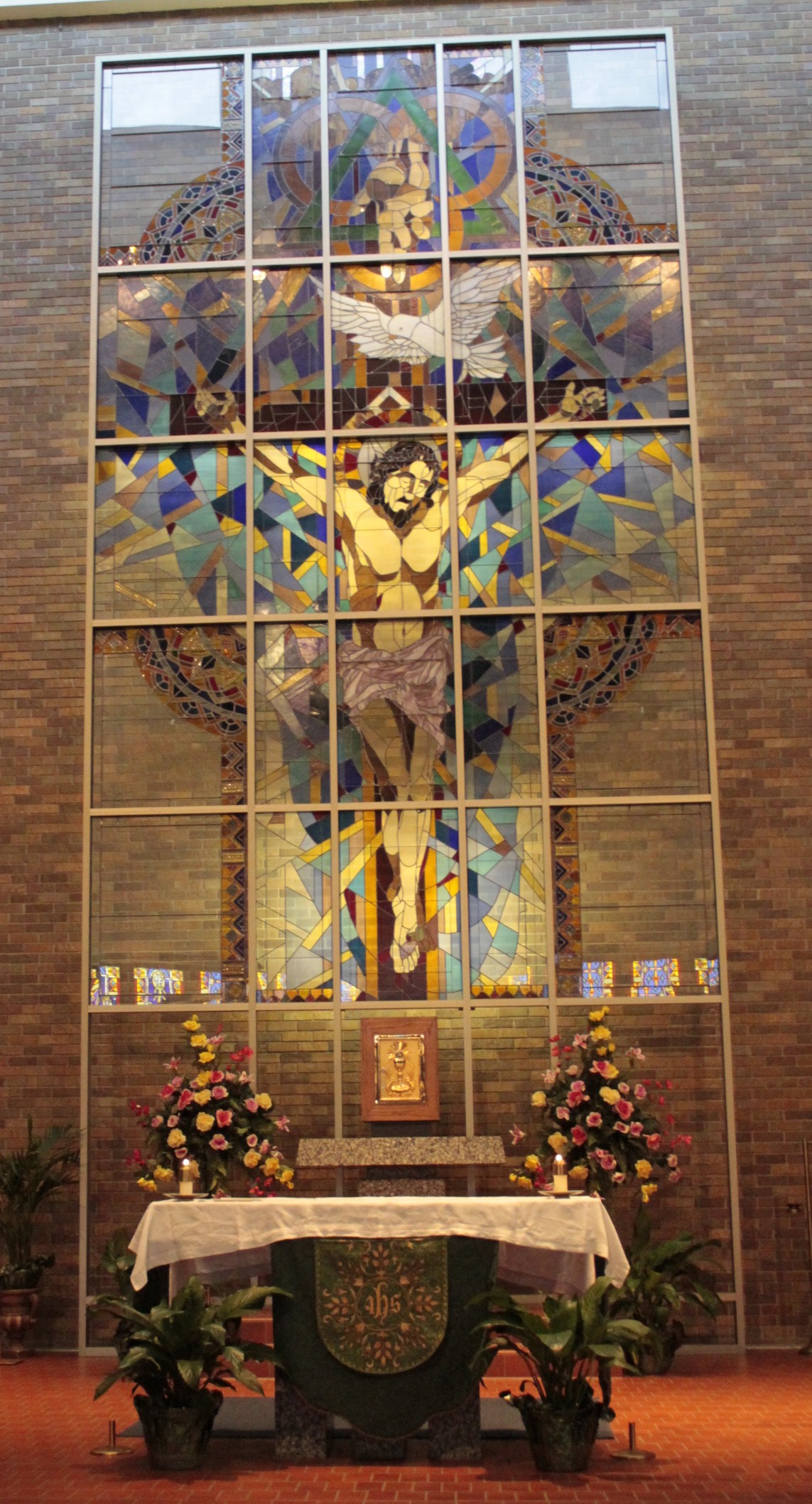
Holy Trinity has a very unusual crucifix over the main alter. It is stained glass mounted on a metal frame, it appears to float over the alter.


Last travel day: West Bend, Iowa to Huron

Hay rolls before the storm

Driving into the storm

Corn Palace Navitiy
Iowa rest area: Running with the big boys.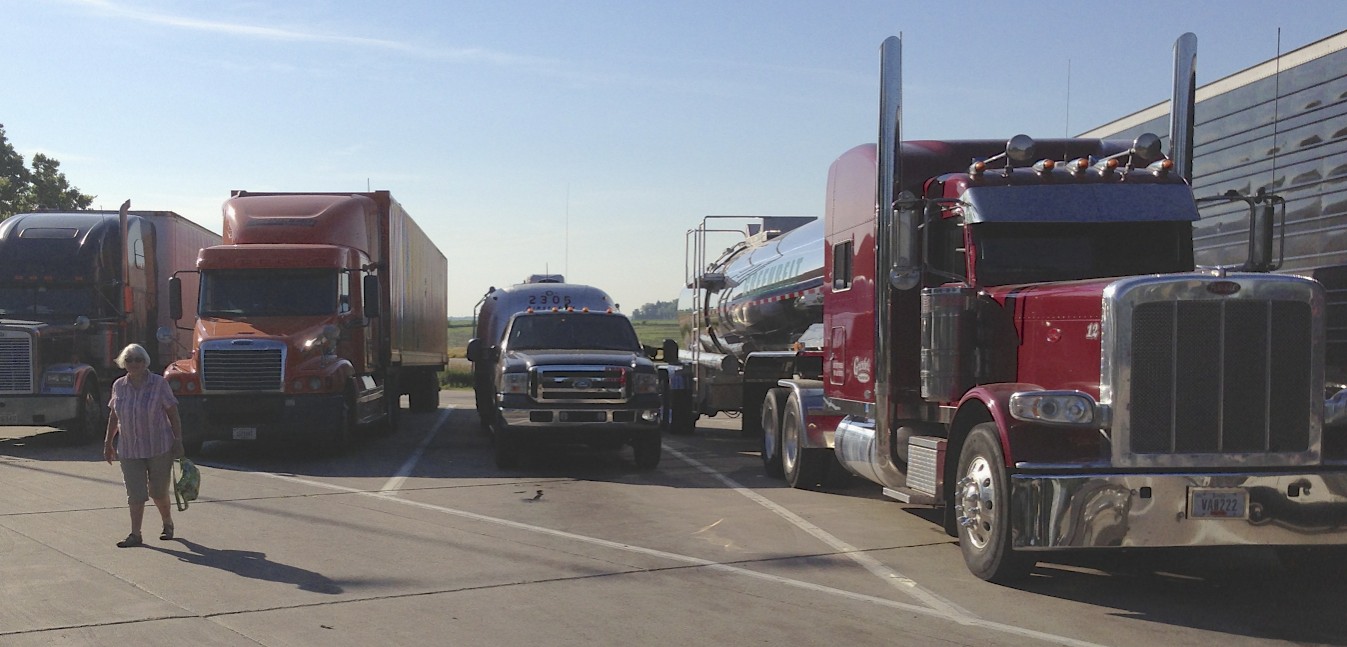
We stopped at the Corn Palace in Mitchell for a quick look. The Corn Palace is a huge civic arena that is decorated each year with corn and grasses. We started the last fifty miles to Huron before long the sky started to darken. The weather radio reported; torrential rain, seventy mile per hour wind gusts, hail and tornado warnings. Countering these conditions with multiple prayers we slowed down and kept going. Finally we arrived in Huron. As we entered town the road was blocked by a tractor trailer that had been blown over by the wind.
Minerals of the Grotto (slide show)
Rocks and minerals of the Grotto are valued are 4 to 5 million dollars.
Grotto of the Redemption
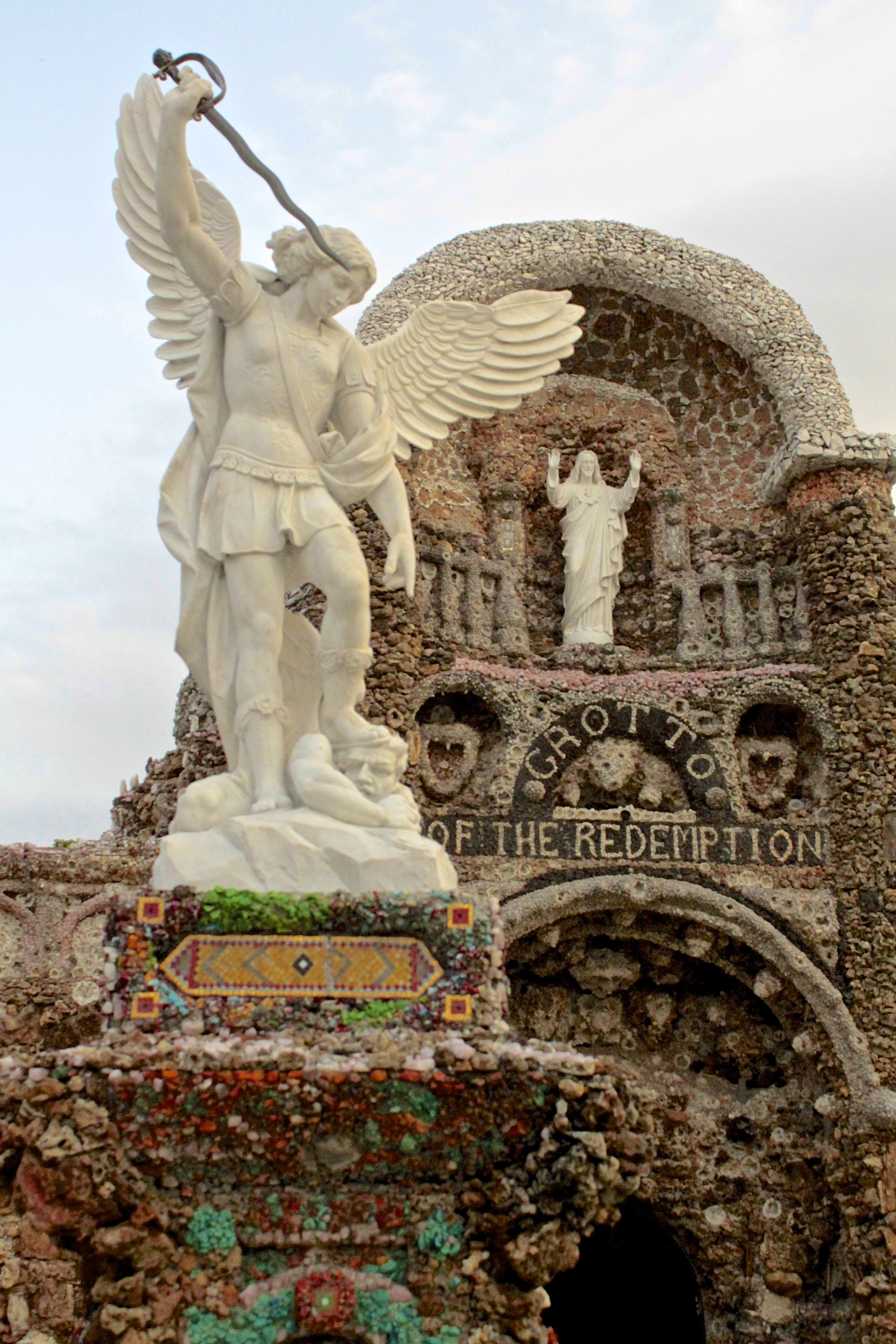
The Grotto of the Redemption: our last stop before Huron. Behind St Peter and Paul’s Church is the Grotto campground ( we’ve stayed their before).The Grotto is the life work of Father Paul Dobberstein who was a priest at the church for fifty-seven years. He constructed the Grotto from a mountain of precious stones, rocks and minerals. Agate, amethyst, jasper, calcite, milky quartz and many others were used. Father Dobberstein even received special dispensation to remove petrified wood from Petrified Forest Arizona. Around and inside the mountain are niches that portray the fall of man and his redemption by Christ. The very apex of the mountain is a cross and Pieta.
.
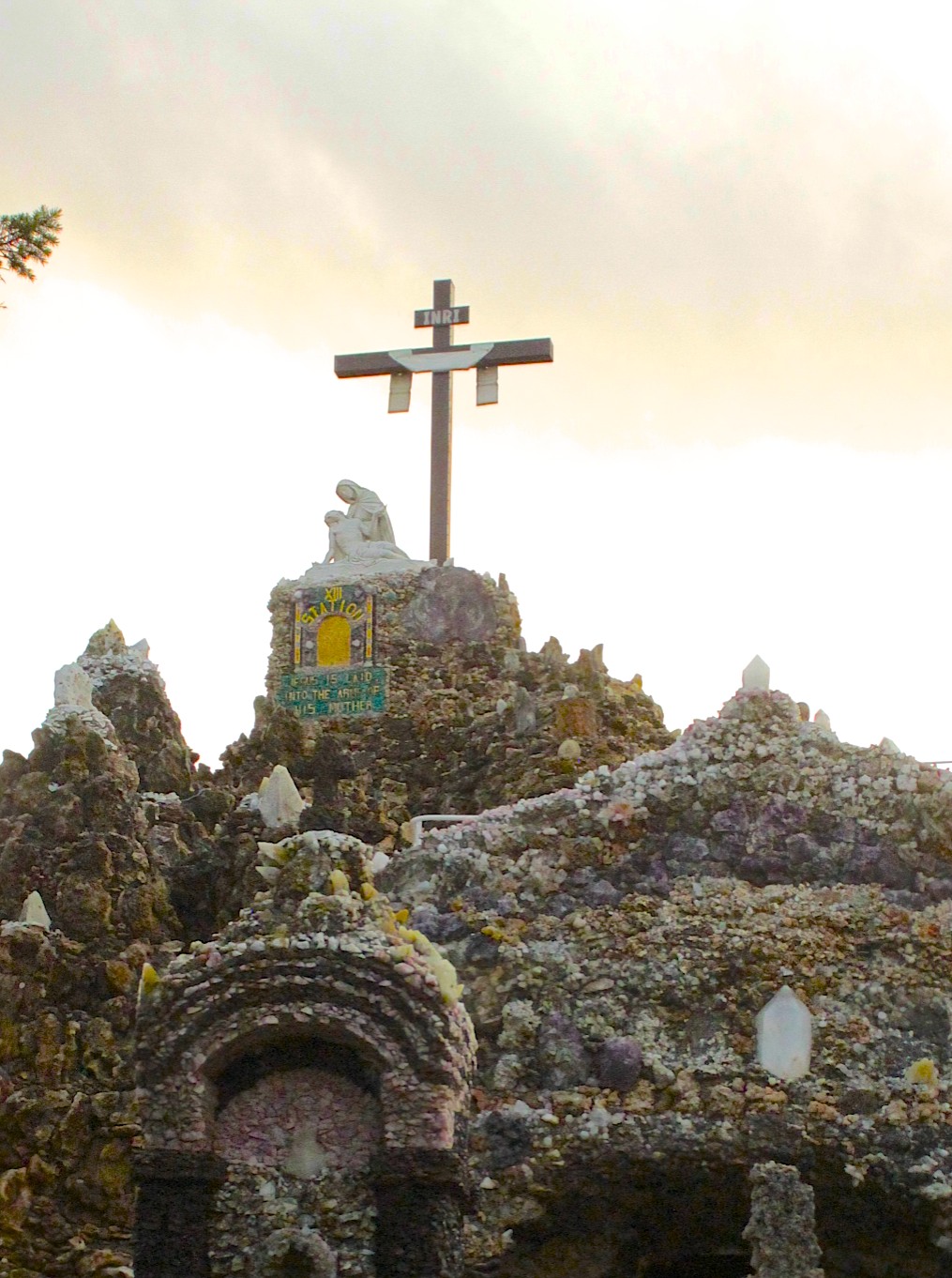
St Peter and Paul’s Church at the Grotto

Welcome!
 Most previous posts have been deleted. However, I left the Alaskan material
for people who haven’t read it. New posts will be from our trip to the 56th
International Airstream Rally in Huron, SD. In July and August we will be
on the Maple Leaf Caravan.
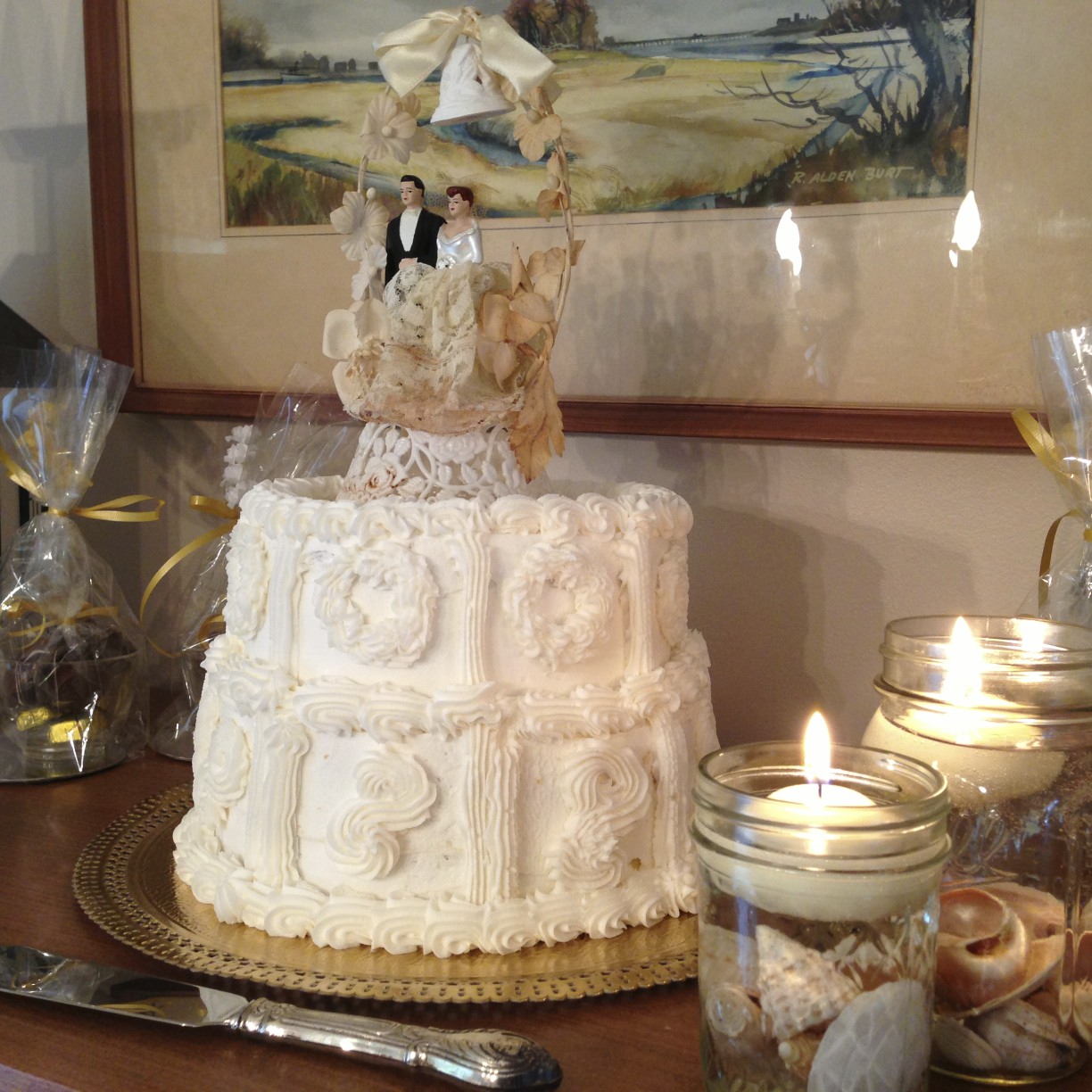
June 15th we celebrated our 50th Wedding Anniversary. Our- son- in law made
a replica of the original cake. We had the original topper!
There is not any point in checking the quantity of times you have been required to post an essay – for anyone who is a school undergraduate this quantity is increased. For you to write down many of these reports is helpful in your everyday living. But unfortunately, too much of a single thing, even to create, is no sensible. We all need to spend an afternoon with loved ones and neighbours or perhaps rest among the strain of life. This article is to you. If you are conscious of it or perhaps not, however you will pay to the licensed authoring solutions so as to answer your write my paper condition and come up with one for you. There are a lot solutions to help you produce, just get hold of them and get them the mystical expressions write my paper. Acquiring highest levels devoid of the pressure to write down them has in no way been easier!
Buy essay website can help and specialists every time you face inconveniences pertaining to your academics
Miscellaneous……


Saturday, September 18th Branston, Manitoba…..the long return to Delaware.
Hyder: Our Last Stop In Alaska

Hyder was our last stop in Alaska. Hyder is a small, 80 residents, community that calls itself a ghost town. It is at the base of a mountain near Steward, BC., bounded by the Salmon and Bear Rivers. It is also an access point for the Tongass National Forest.


Tongass is the largest National Forest in the United Stated, about 13 times the size of Delaware. While in Hyder we viewed the Bear and Salmon glaciers, saw the mail plane come in, and saw a huge black bear (right on main street). We drove by the spectacular Bear Glacier on the way into Hyder. The next day we drove 25 miles into the Tongass to see the Salmon Glacier….it was much different than the others, we were above it looking down and back into the ice field. Salmon Glacier is 4 miles and a thousand feet thick in the center. The road to Salmon Glacier is narrow gravel with switchbacks, rock avalanche areas and steep drop offs….no guardrails. On the way up the road there was an old gold mine we looked into….still ice inside. After six hours of exploring and viewing some of the wildest country in the world we were ready to return to the camp.
Fjordland Express

Eldred Lighthouse... 
- The Boat…..


The Fjordland express is a high speed catamaran, transports 50 people, powered by two 800 hp diesel engines. Fjordland consumes 40 gallans of fuel hour, at 3/4 throttle, twice that at full speed. We took it 90 miles down the Lynn Channel to Alaska’s capital, Juneau. The trip down was in the rain, we saw a bear or two, dozens of eagles, glaciers and a few fin-back whales. After looking around Juneau for 2 hours we tooka bus to the Menendall Glacier. While at the glacier the sun came out and the trip back to Haines was clear and sunny. While returning to Haines we saw many whales….the 100, 000 pound finback kind: a mother and her baby, a group of about six bubble feeding, one young one splashing and slapping his flukes on the water. During bubble feeding they herd a school of fish to the surface and eat them, fish trying to escape makes the water bubble. Each whale needs 1000 pounds of food per day.
Haines: Alaska’s best !
Every stop we made in Alaska had something unique; history, scenery, community, glaciers, rivers, etc. Of all these, I think Haines would be the place I would live, if I moved to Alaska. Haines is a small town, about 2000 in the winter. But it has an award winning school and library. The school has about 330 students, from Kindergarden to twelfth grade. Two if its unique features are an awesome totem pole out front and a full sized pool, attached to the school, so the kids can swim all winter. Haines also has a great bookstore and two bakeries. But, here’s the best part, Haines is located on a fjord. Towering, snowcapped mountains often ending right at the waters edge. This also gives Haines an all weather deep water harbor. The Chilkat River has a broad outwash plain so Haines, unlike Juneau, is built on flat land. It is nicknamed the Valley of the eagles, because of the available-ability of food, up to 3000 pairs winter there around the Chilkat River. We saw hundreds of eagles during our 4 days in Haines. But there are two negatives to life in Haines. One, lack of emergency care, one lady told us about her husband who fell off a cliff while goat hunting. It took seven hours to transport him to a hospital. Two, their AVERAGE snowfall is over 40 feet. That’s right,


40 FEET. But according to people we talked to the streets and roads are always clear and a snow day for the kids is unheard of….and The whole town is connected to and emergency generator, so they never loose power !
Returning to the Alaskan Highway at Tok we turned South through Burwash, to Haines Jct. There we took the 145 mile Haines Highway to the end of the road…Haines. Haines was the next to last stop in Alaska and for me it was the best ! More about that later…. The Haines Highway is a good paved road that winds its way Southeast following and crossing many creeks and rivers. It passes through Aspen, Sitka and Black Spruce forests, but most of it is above the tree line. The high point is Chilkat Pass 3500 feet, much of the road before and after the pass winds across tundra and 


ancient glacial moraine. We were lucky when we went down the road and returned it was peak autumn foliage. Yellow Aspens, mosses, fireweed and many other plants added their colors to the spectacular scene…topped off by fresh snow on the mountains.
Views of Valdez, Alaska


Palmer, Alaska and the Matanuska Valley


Gracie cooks on the Colony stove.... - The mine …after a hike up the hill.

In 1935, President Roosevelt as part of the New Deal had one hundred projects to relocate people to provide jobs. Palmer, Alaska was one of these places…204 families from Minnesota, Wisconsin and Michigan were brought there to start a farming area. Seventy-five years later the farms and some of the houses and bars are still there. It was called the Colony, we visited a Colony house, now a museum, heard a Colony grandkid tell about her life on a colony farm. It was very interesting, we also saw present day farms and saw many colony barns. While in Palmer we also drove up to Hatcher pass and visited a former gold mine, now a ghost town, and State Park. One Colony farm we visited now raises Musk Ox.
The Moose is Loose…
The Moose is Loose…..The best bakery of the trip !!!!


 Airstream 2305's Blog